


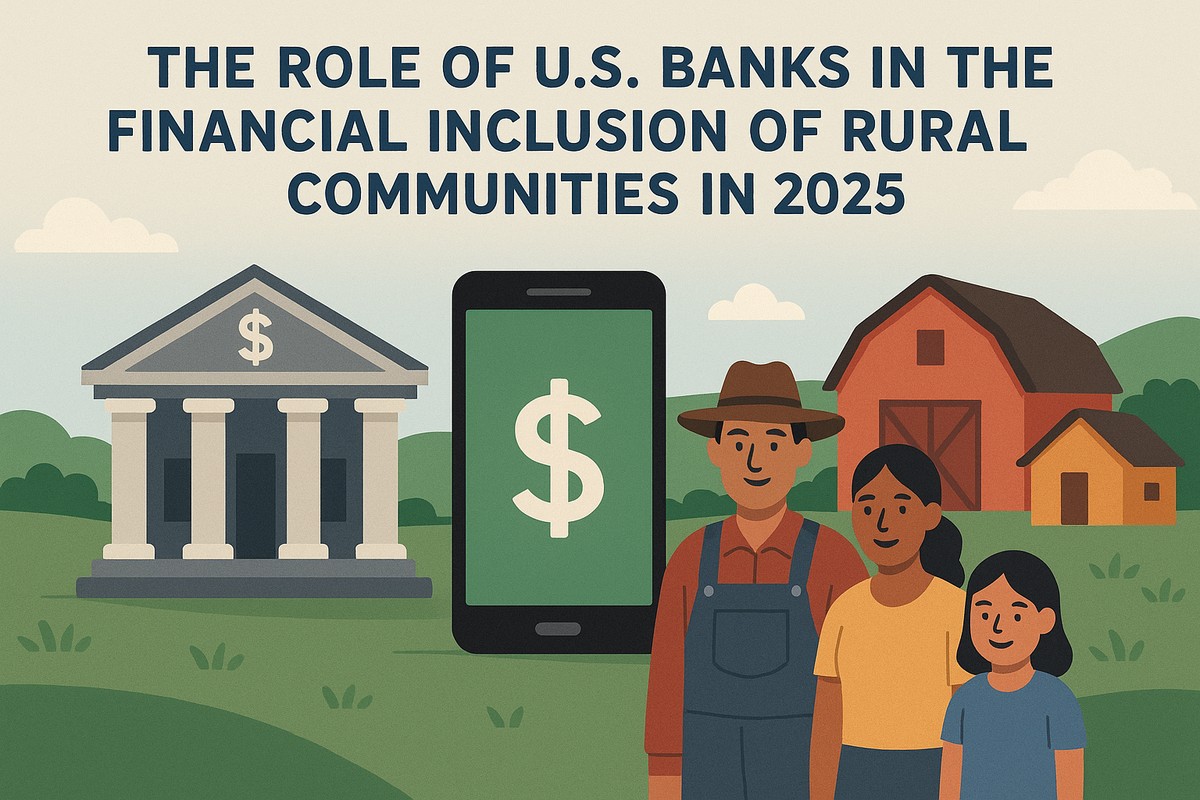
In 2025, financial inclusion in rural America is no longer framed as charity or a side project—it is increasingly seen as a competitive frontier for U.S. banks. Small towns, farming corridors, and remote counties are facing unique pressures: aging populations, long travel distances to branches, volatile commodity prices, and patchy broadband.
At the same time, many rural residents are entrepreneurs in everything from agriculture to tourism to home-based services. Banks that understand these dynamics are reshaping how money moves, how credit is assessed, and how trust is earned outside metropolitan centers.
Expanding access beyond city limits
A big shift in 2025 is the move from “branch-first” to “service-first.” Traditional banks are keeping a lighter physical footprint—smaller hubs, shared spaces, or rotating staff—but widening coverage through mobile units, call centers with local expertise, and simplified onboarding. This matters because rural customers often juggle multiple roles and seasonal income, making long trips to a branch costly in time and fuel.
Credit scoring is evolving too. Instead of relying only on classic metrics that can penalize thin-file borrowers, some banks are incorporating alternative signals (like rental history, utility payments, and documented farm revenue). The goal isn’t to lower standards; it’s to measure risk more accurately for people whose financial lives don’t look suburban.
Digital tools tailored to low-density regions
Tech is doing heavy lifting, but the winning approach is not “app-only.” Banks are investing in hybrid models: easy-to-use mobile banking paired with human support that feels local. In places where broadband is unreliable, institutions are optimizing apps for low-data use, enabling offline features, and expanding text-message banking.
Some banks are also using AI-driven budgeting or crop-planning integrations that match rural income patterns. These systems can suggest the best moments to save, borrow, or refinance based on weather forecasts, input costs, and expected market swings.
Partnerships, trust, and sustainable credit
The most effective inclusion in 2025 comes through collaboration. Banks are working with credit unions, community development financial institutions (CDFIs), local cooperatives, and even county governments to co-lend, share risk, and reach borrowers others miss. These partnerships help lower capital barriers for first-time business owners, women-led farms, and Indigenous or immigrant rural communities.
Just as crucial is rebuilding trust. Many rural regions have seen branch closures and feel overlooked. Banks that show up consistently—through financial education in schools, workshops at community centers, and transparent loan terms—are earning long-term customers. In short, inclusion is becoming less about a single product and more about a durable relationship that respects rural life and strengthens local economies.
👉 Also read: The Race of U.S. Banks to Offer Predictive Financial Intelligence